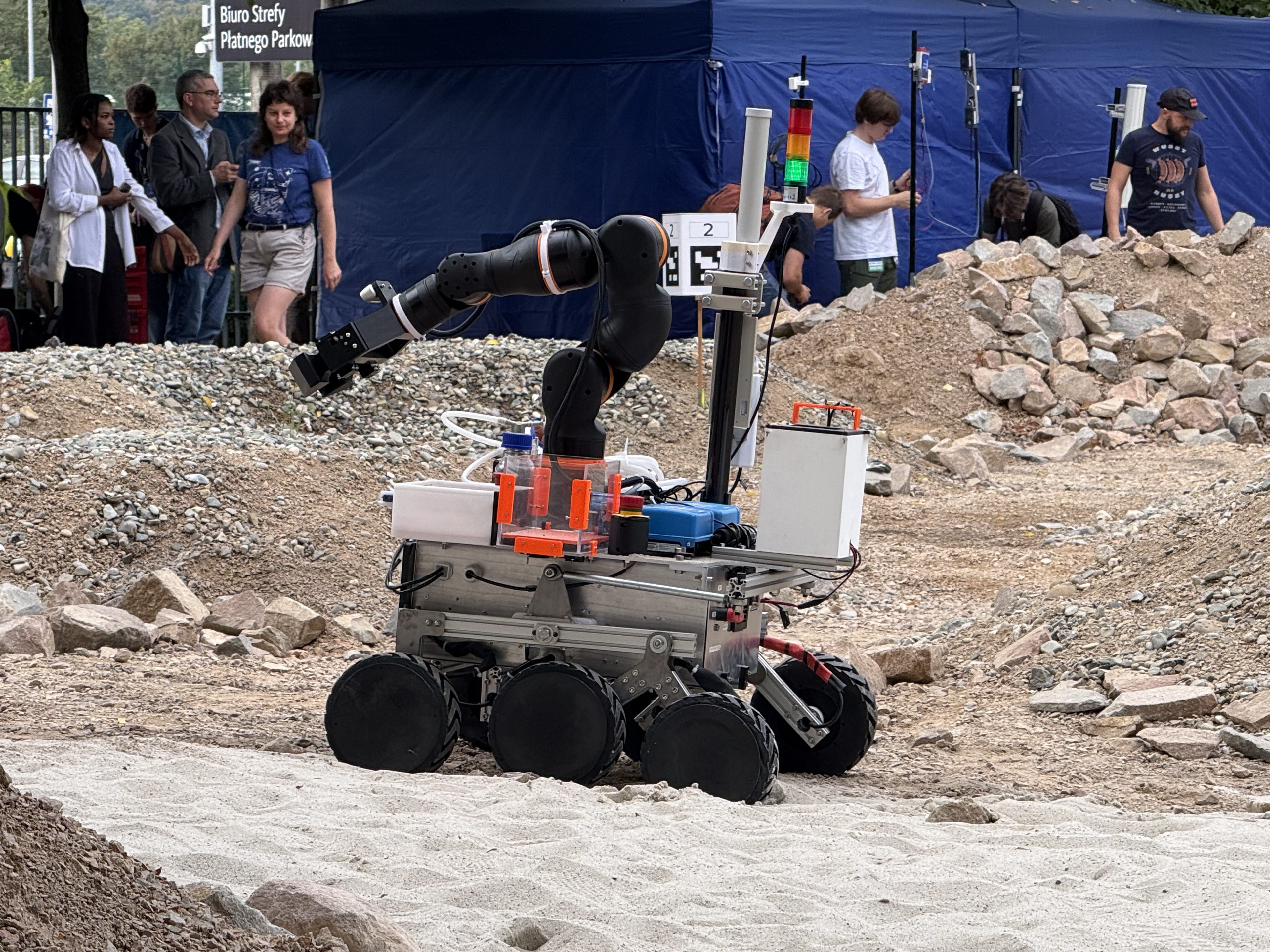
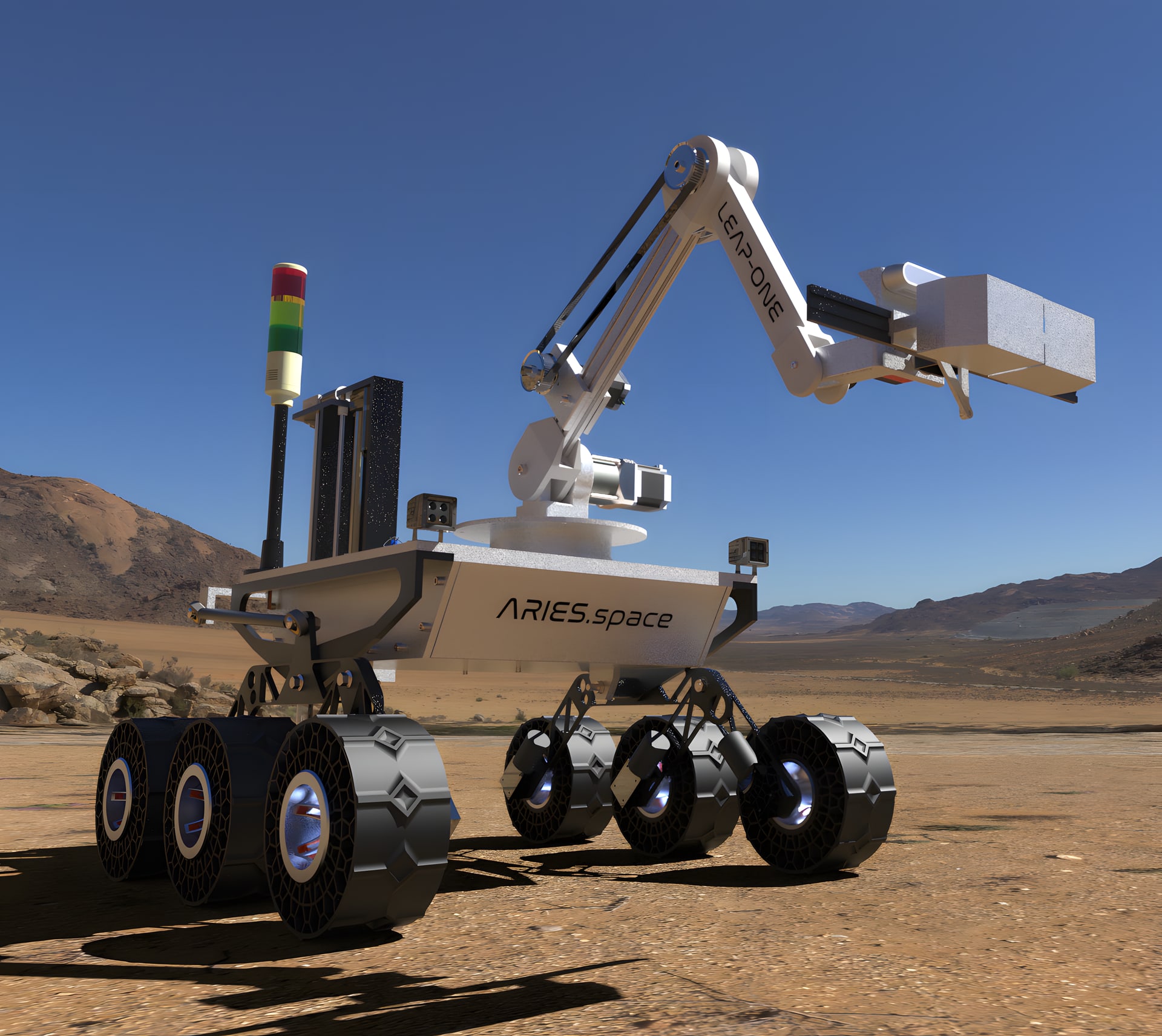
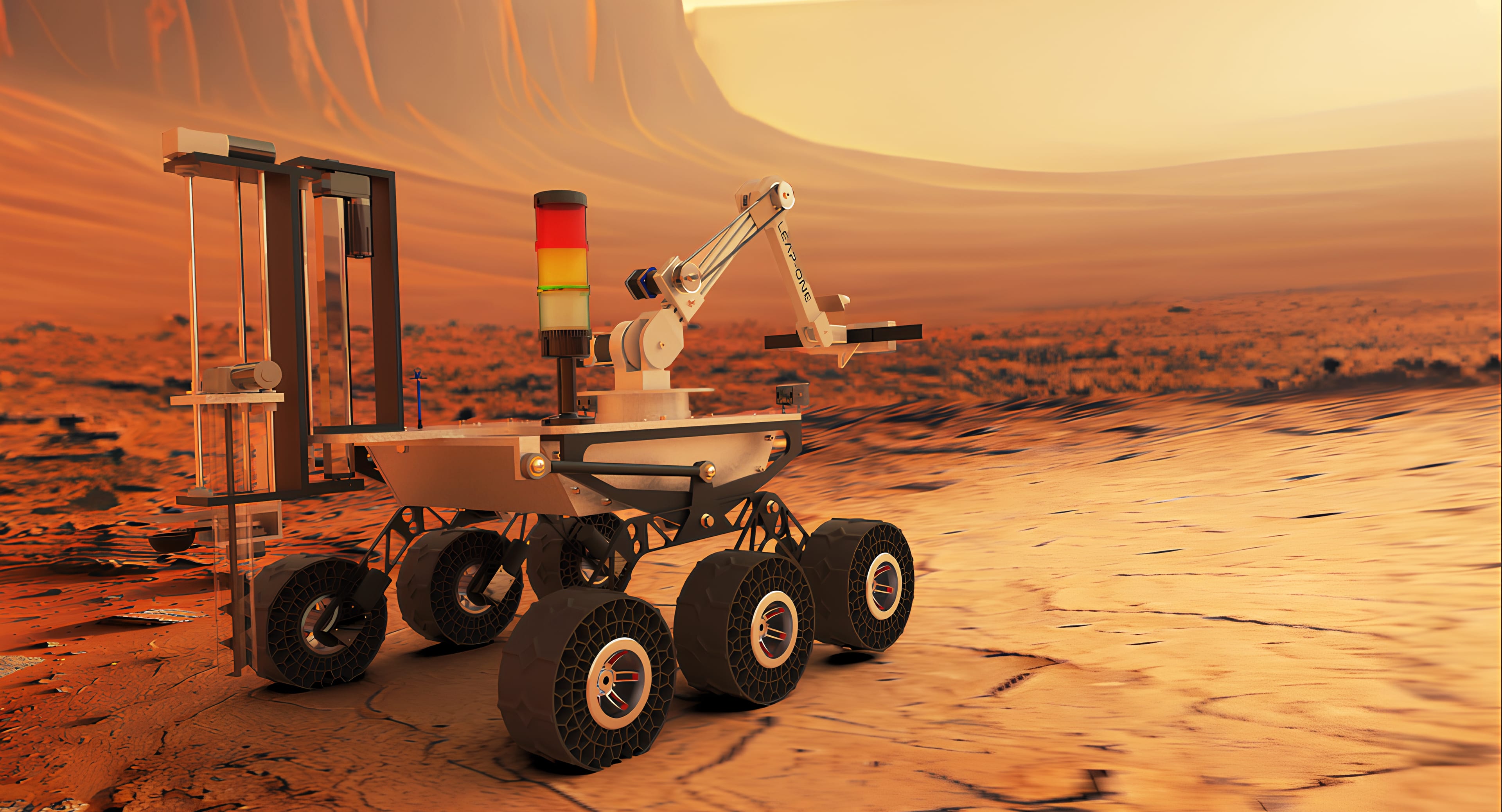
On our first ERC appearance, HSM Aries finished 17th in the 25-team finals, from 124 registered teams worldwide. Built without major sponsorship, LEAP-One earned 1492.25 points. A proud beginning — and the experience driving Leap-2 forward.
The team has released its official 10-minute ERC 2026 qualification video, presenting LEAP-One’s mobility, navigation, robotic systems, science suite, and mission control.
Archive
Every dispatch since the first sketch.
27 earlier dispatches from the HSM Aries programme.
HSM Aries.space represented Hochschule Schmalkalden at Space Night 2026 in Jena, presenting LEAP-One and AQUILA to state leaders and aerospace organizations.
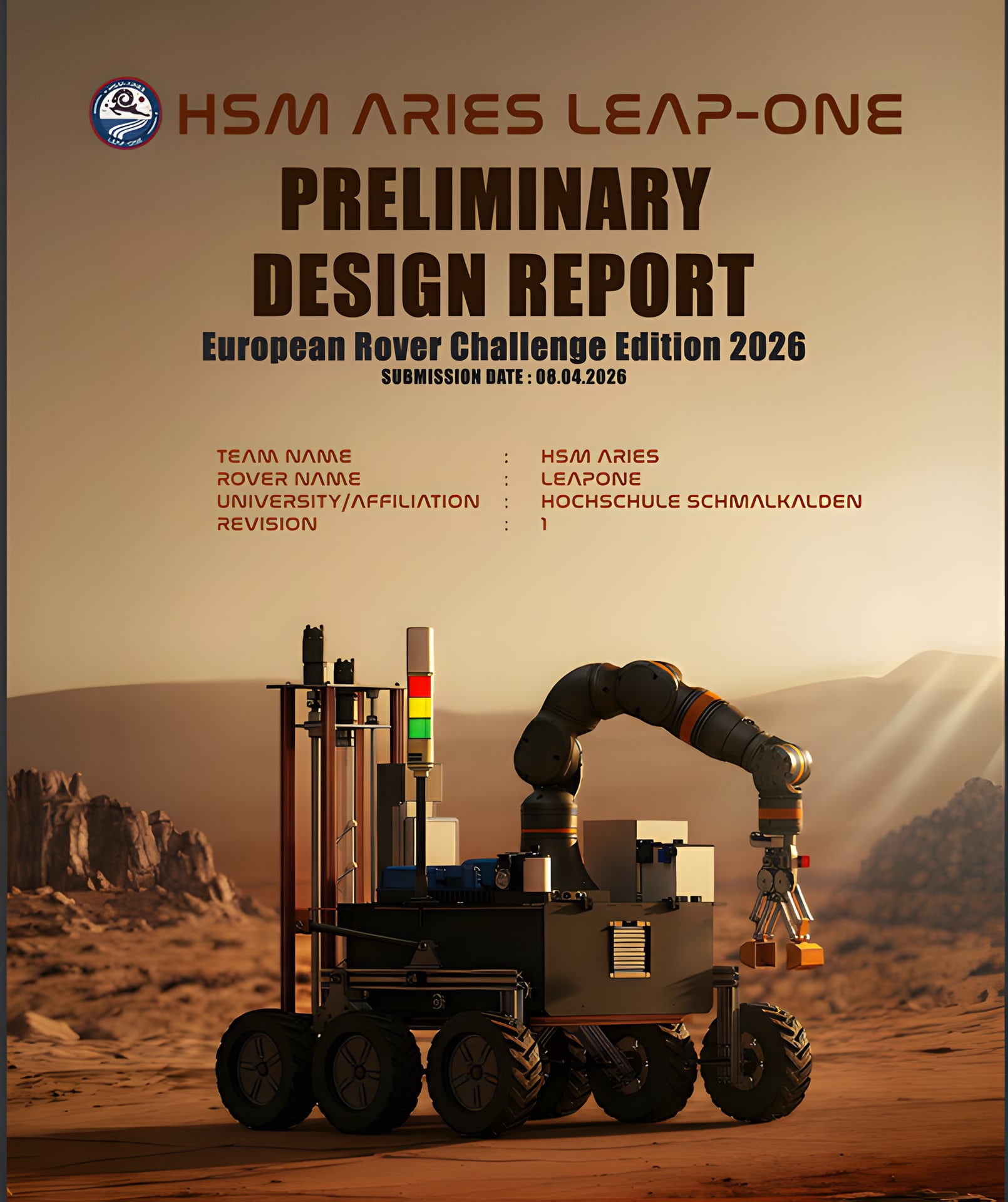
HSM Aries.space completed two key ERC 2026 milestones: submission of its 100-plus-page Preliminary Design Review and hardware integration of the mission ground station.
LEAP-One now carries a compact high-performance computer with an Intel Core Ultra 9 processor and NVIDIA GeForce RTX 5080 for autonomy, perception, and mission data.
A manual joystick field test took the rover across gravel, paved road, uphill sections and mud. The drivetrain, chassis and control link held up with no issues observed.
A delegation from the LEAP-One team attended Space Tech Expo Bremen 2025 to benchmark the rover against industry standards and open partnership conversations across the aerospace sector.
Thuringia’s Minister of Science visited the robotics laboratory at Hochschule Schmalkalden, saw the LEAP-One rover and took the controls for a test drive.
The team tested the CAN adapter with six ODrives over ROS commands, achieving full calibration and coordinated motion on all six wheels for the first time.
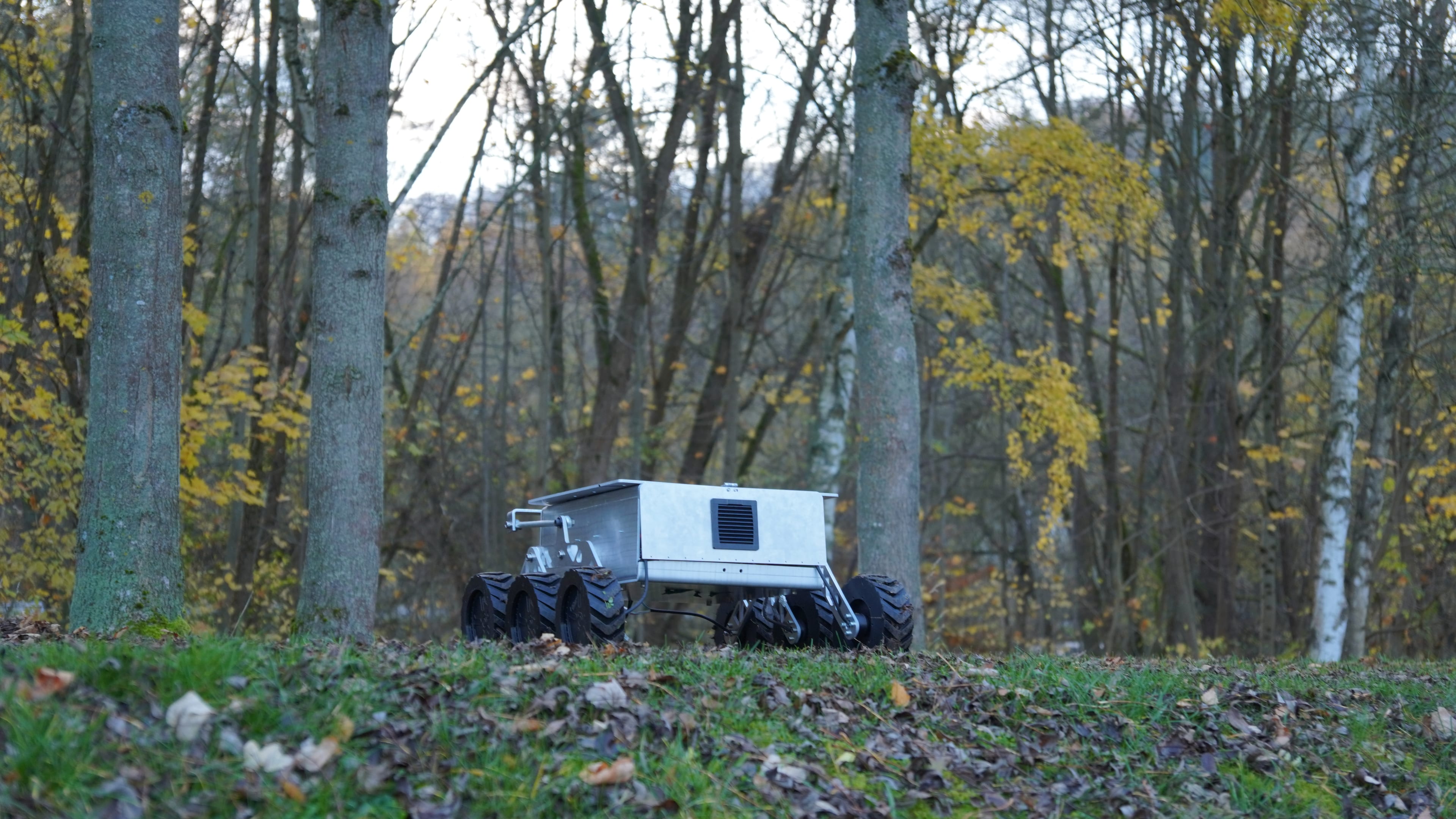
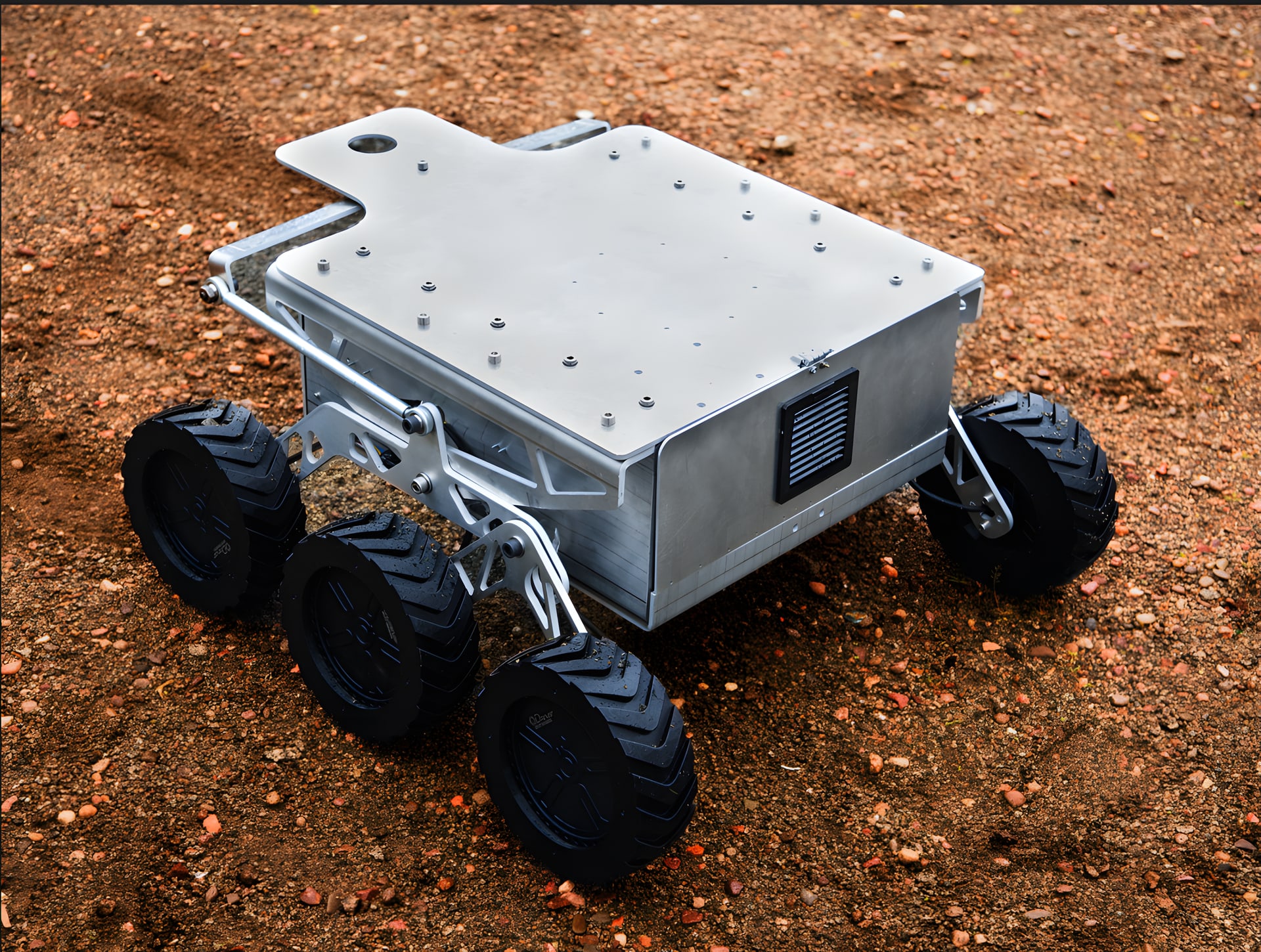
LEAP-One is now fully manufactured and assembled — precision parts from Boehm Group and final 3D-printed wheels complete the platform. After months of design and testing, the rover moves from concept to mission-ready hardware. The team prepares for dynamic trials to validate performance, durability, and payload integration.
After a competitive selection process, HSM Aries welcomed 10 new members to the rover team. Carefully shortlisted from strong applicants, these student engineers bring mechanical, electrical and software skills, fresh perspectives, and a 30-day action focus to speed the LEAP-One project from bench to field.
After multiple iterations and load tests, the team finalized the LEAP-One wheel design. Test prints proved traction and durability; Vighnesh then produced the final 3D-printed wheels. This marks a critical mobility milestone as the rover prepares for field trials, with a robust wheelset ready to handle rough terrain and real-world testing.
Under Harsha and electrical lead Ayan, the team validated ODrive S1 motor controllers, hub motors, battery modules, relays, and the emergency stop system. Early trials showed smooth motor response and stable power delivery. With safety systems confirmed, the rover moves into dynamic testing where control, power, and fail-safes will be stress-tested for fi…
Boehm Group GmbH in Zella-Mehlis sponsors materials and machining for the LEAP-One rover, providing professional-grade fabrication and hands-on mentorship. This industry collaboration accelerates prototype durability and assembly, lets students learn industry processes, and helps the team document build steps as parts move toward integration and upcoming…
After a successful pitch at Boehm Group GmbH in Zella-Mehlis, Boehm agreed to sponsor materials and machining for the LEAP-One rover. This sponsorship validates our design and brings professional fabrication capacity to the project, letting the team move from prototype parts to precision-manufactured assemblies and accelerate toward integration and field…
After months of prototyping and iteration, the team has finalized the rover's structural design — optimised for strength, weight, and manufacturability. With designs signed off, parts will move to precision machining at Boehm Group in Zella-Mehlis. This milestone moves the project from CAD into physical production and assembly.
Development of the Aries.space website is underway. The new digital hub will showcase HSM Aries projects (including the LEAP Series), publish mission updates, and host resources for students and collaborators. Expect behind-the-scenes content, progress reports, and a user-friendly launch that brings our student-driven space work into one public home.
LEAP-One has been selected for the European Rover Challenge 2025. This honor puts HSM Aries on an international stage to test autonomy, sampling systems, and a modular chassis under competition conditions. Over the coming months we'll intensify field tests, refine systems, and publish behind-the-scenes updates as we prepare to represent Hochschule Schmalk…
HSM Aries has released the final high-fidelity render of LEAP-One, showcasing the modular chassis, integrated sensors, and drive architecture developed after months of iteration. The image marks a design milestone ahead of subsystem integration and ERC 2025 preparations. With visuals public, the team now focuses on integration, testing, and field readiness.
Mechanical lead Teja completed the initial robotic arm design for LEAP-One: a multi-jointed manipulator with an adaptive gripper engineered for sample collection and maintenance. Optimized for durability and precision, the design will now be integrated with rover subsystems and undergo rigorous testing to validate dexterity, payload handling, and resilien…
Mechanical lead Danny completed the LEAP-One drill mechanism: a telescopic solid-auger design with dual-motor drilling and rotation capable of extracting soil samples beyond 30 cm. The design emphasizes reliability and precision for varied terrains. With the mechanism finalized, the team proceeds to subsystem integration and upcoming testing to validate d…
Electronic bay design for LEAP-One completed, providing modular integration for power management, sensors, comms and control. The layout improves wiring, thermal management, and future upgrades. With design finalized under mentor KK Achari's guidance, the team will now begin integration testing and prototyping to validate system performance ahead of field…
Mentor KK Achari has finalized the LEAP-One mission badge — a futuristic emblem that symbolizes the team's technical ambition and collaborative spirit. Designed for use across branding, documentation and promotional materials, the badge unifies the project identity and strengthens trust with partners as LEAP-One prepares for ERC 2025 and upcoming outreach.
The HSM Aries team has completed the LEAP-One base design: a modular chassis, optimized power management, and payload-ready interfaces engineered for durability and adaptability. This foundational milestone clears the path for subsystem integration, prototyping, and testing ahead of ERC 2025 — bringing the rover one confident step closer from blueprint to…