DRIVE · AUTOMATION · ROBOTICS

INITIALISING MISSION SYSTEMS00%
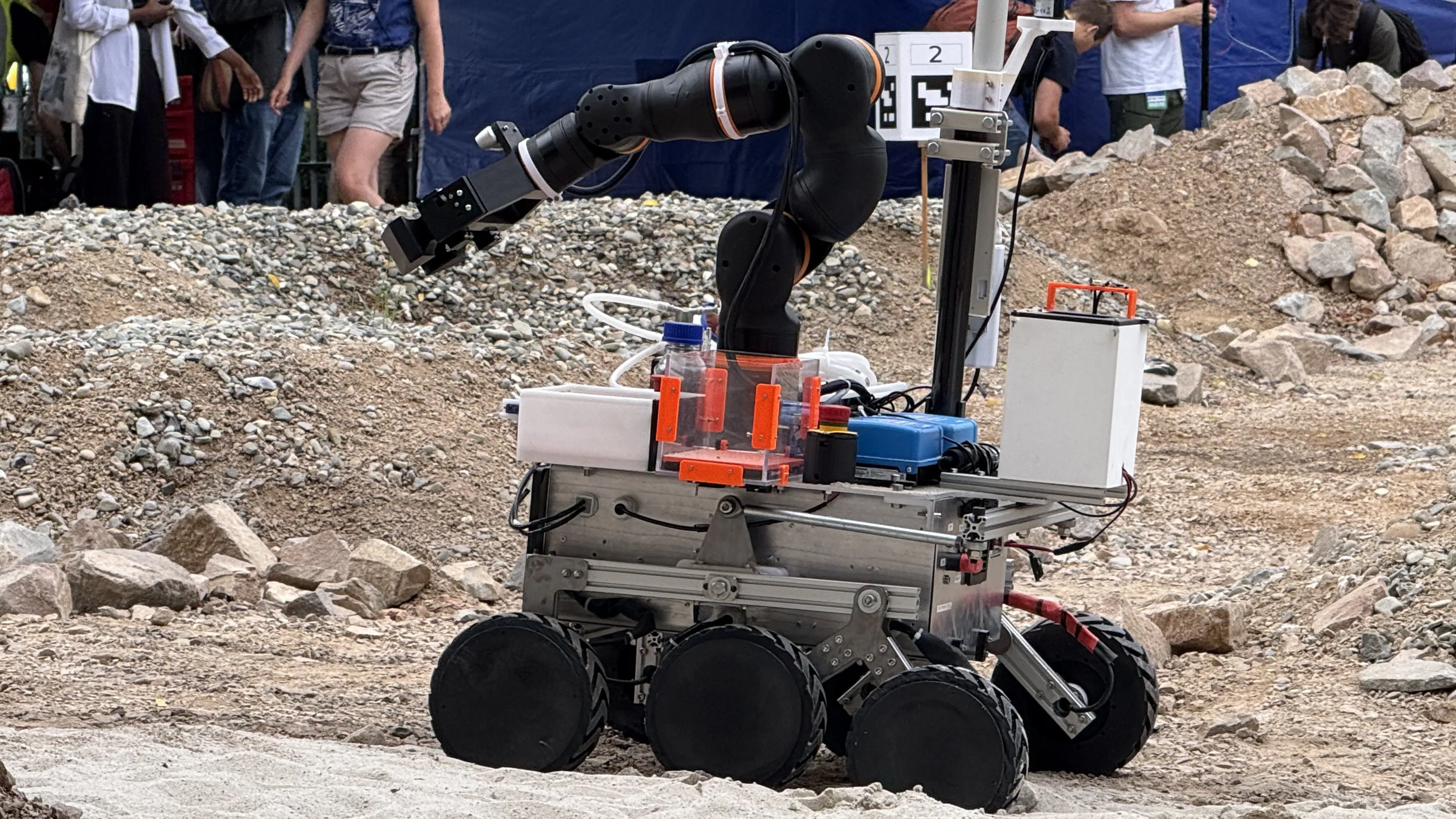
LEAP-One rover on a blue-hour planetary test landscape
LEAP-One mission badge

HSM ARIES // LEAP ROVERS / PROJECT 01

LEAP Rovers.
Beginning with LEAP-One.

PROJECT 01 / MISSION BASELINE

Built to
go farther.

Mobility

Independent BLDC drive modules

Energy

1.5 kWh25.6 V LiFePO₄ power architecture

Science

≥300 mmCoaxial auger sampling depth

A growing rover programme

ONE SERIES. FIRST ROVER.

LEAP Rovers is HSM Aries’ evolving family of planetary robotic platforms. LEAP-One is its inaugural rover: Project 01, built to establish the technical foundation for the missions and machines that follow.

Its six independent Botwheel BLDC modules, differential rocker-bogie and 25.6 V LiFePO₄ power bus unite mobility, sensing, manipulation and deep sampling in one field-ready machine—an architecture designed to inform the next leap.

Vehicle architecture / LEAP-One

Four mission systems.
One rover.

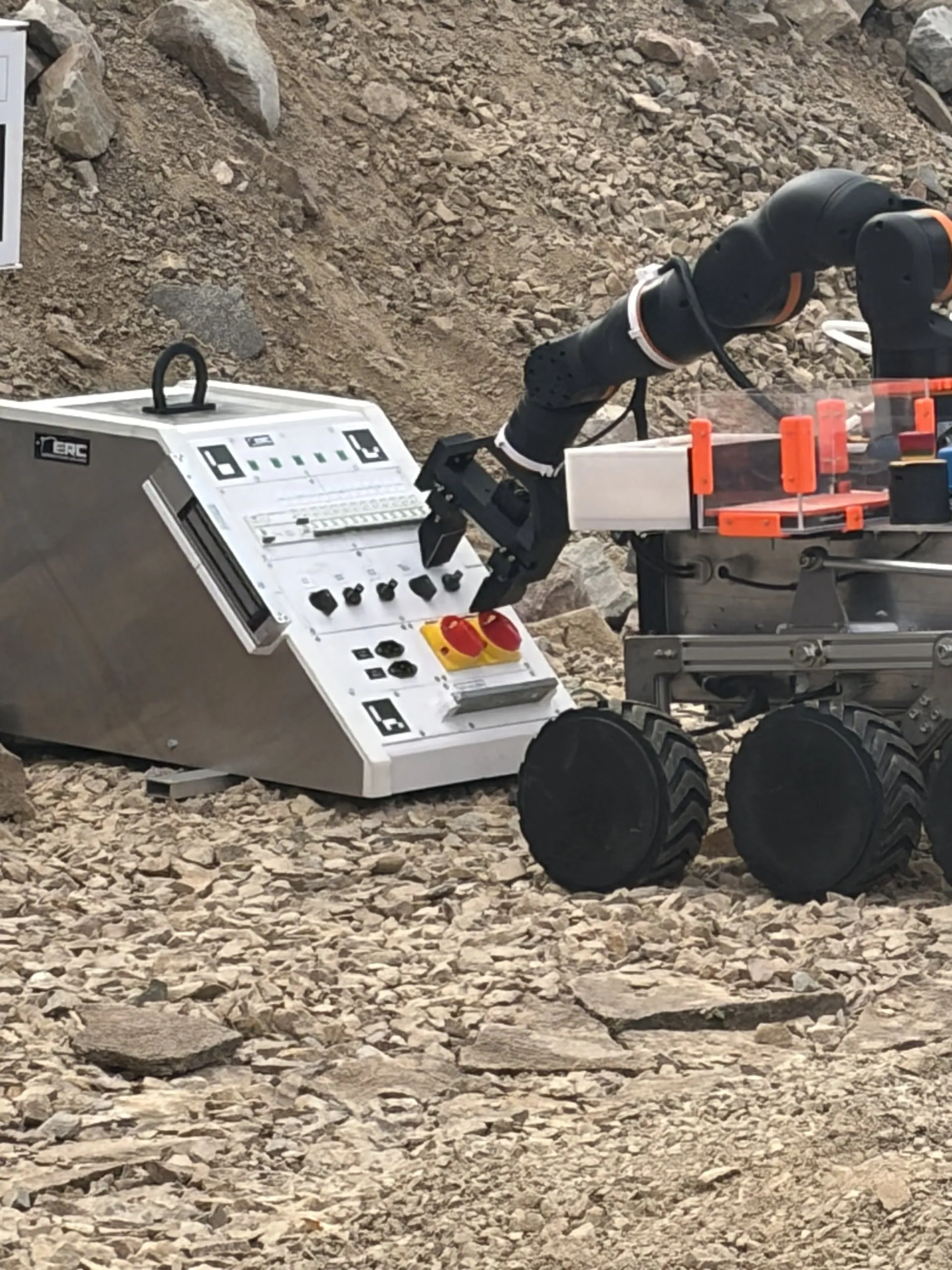
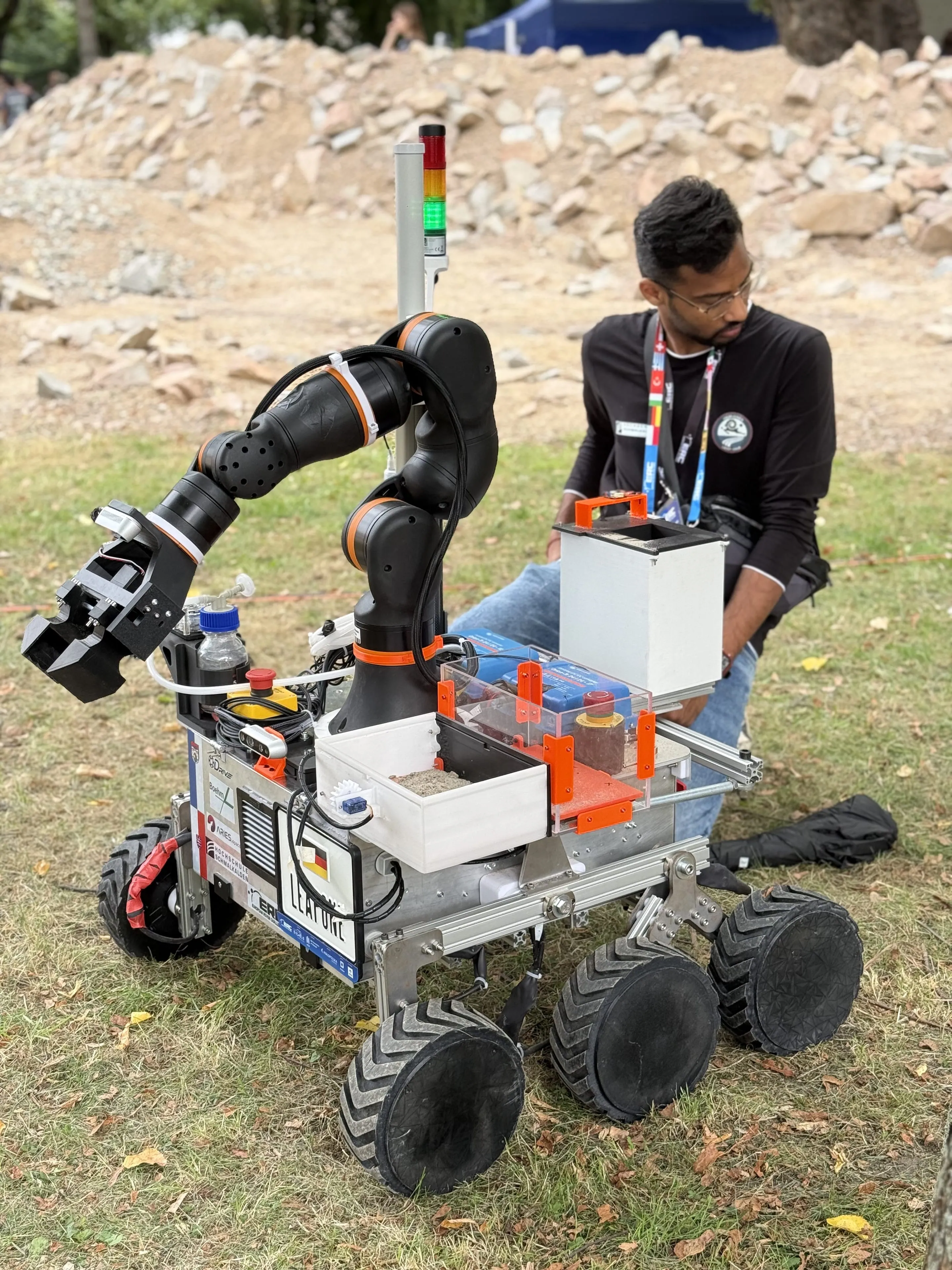
LEAP-One integrates six-wheel mobility, autonomous navigation, precision manipulation and deep-sampling science on one field-ready research platform.

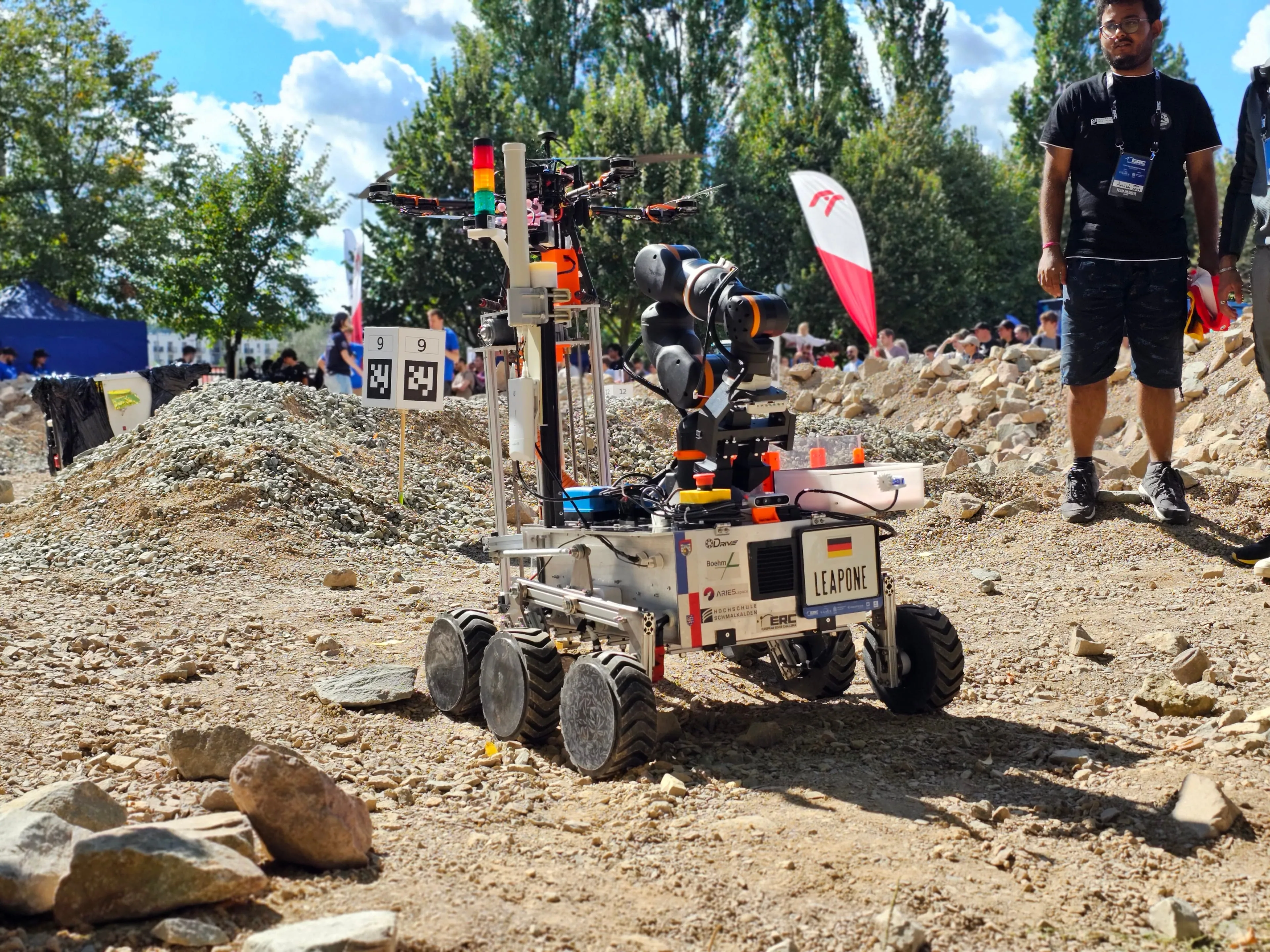
LEAP-One rover in a complete vehicle view
LEAP-ONE / OPERATIONS SOFTWARE

The view from
mission control.

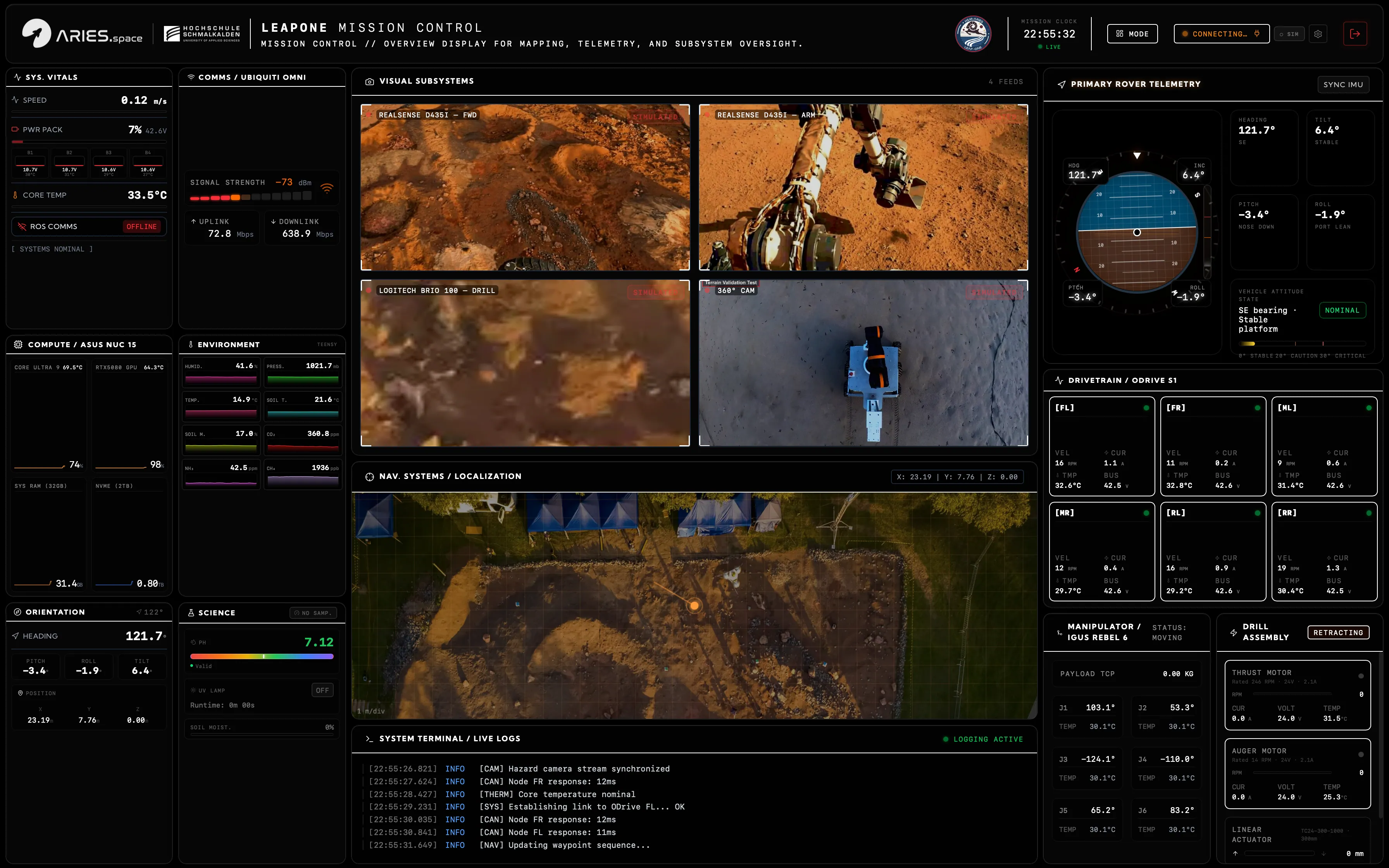
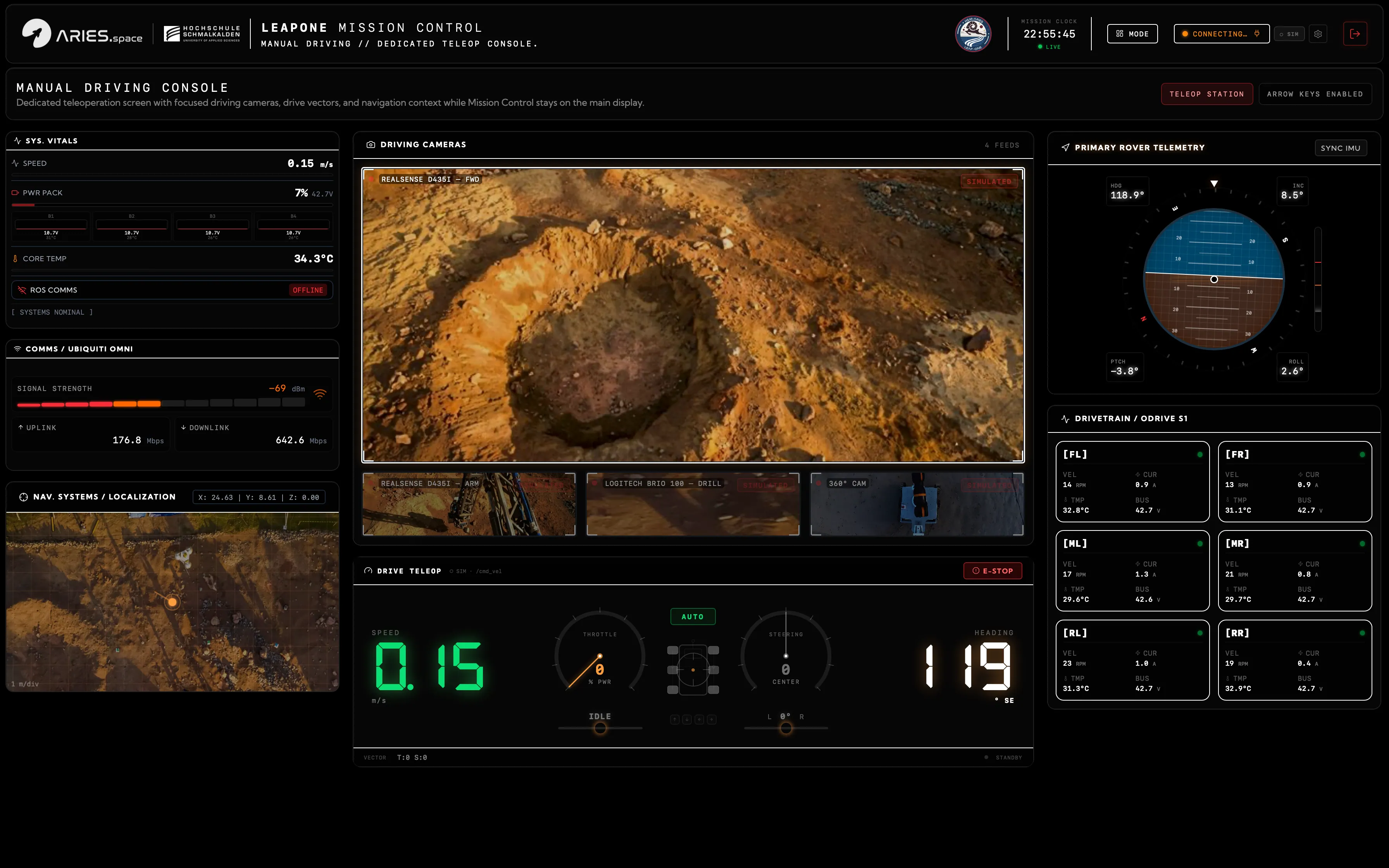
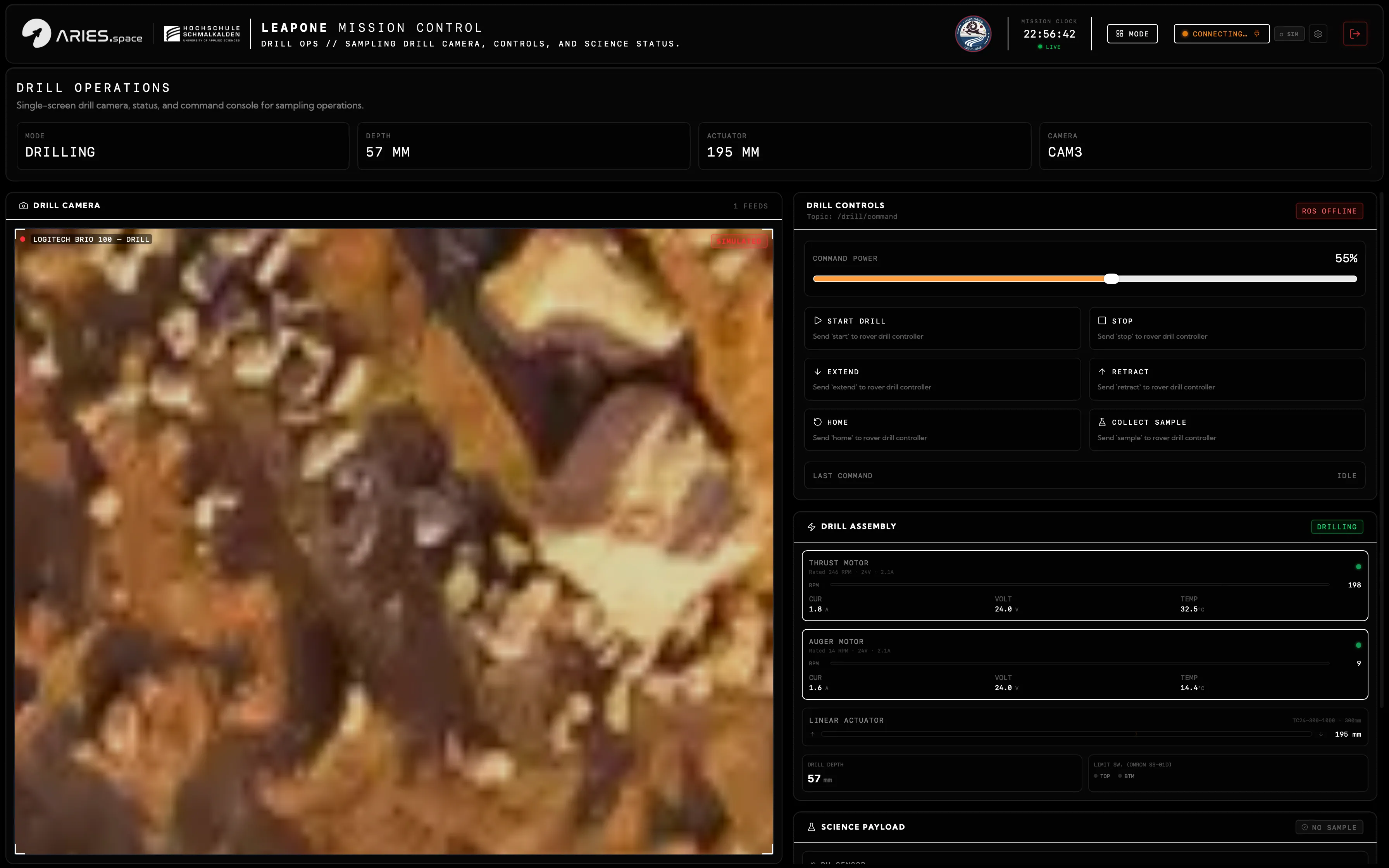
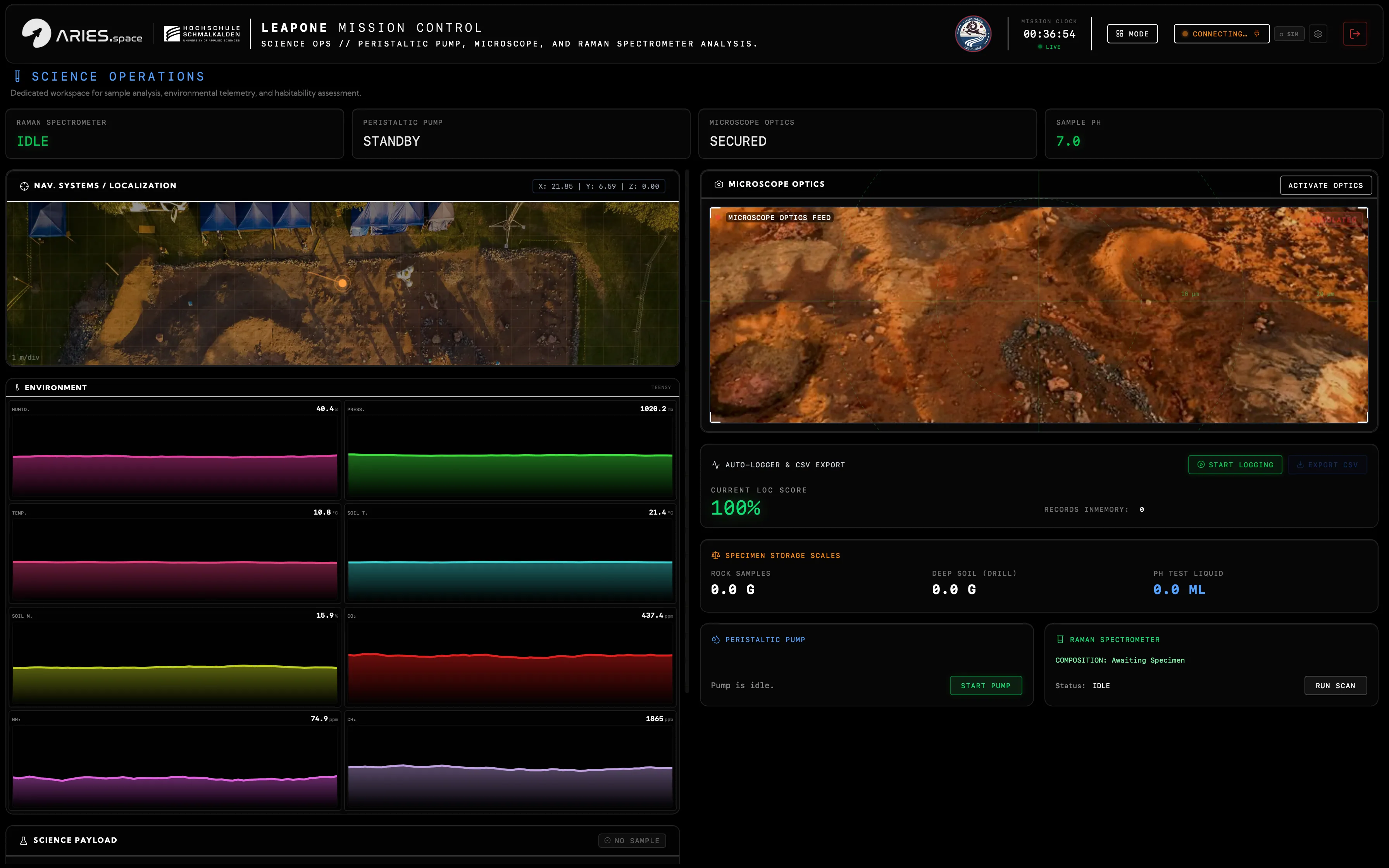
A purpose-built LEAP-One workstation brings mapping, telemetry, camera supervision and subsystem operations into one field-ready control environment.

LEAP-One Mission Control overview with telemetry, camera feeds, navigation map, drive status, arm status and drill controls
01 / OVERVIEWMission Control
LEAP-One manual driving workspace with focused rover controls and navigation telemetry
02 / MOBILITYManual driving
LEAP-One drill operations workspace with sampling and payload controls
03 / SAMPLINGDrill operations
LEAP-One science operations workspace with payload instrumentation controls
04 / SCIENCEScience operations
CAMERA SUPERVISIONROVER TELEMETRYDRIVE + ARM + DRILLSCIENCE PAYLOAD

Core Subsystems

FOUR MISSION SYSTEMS

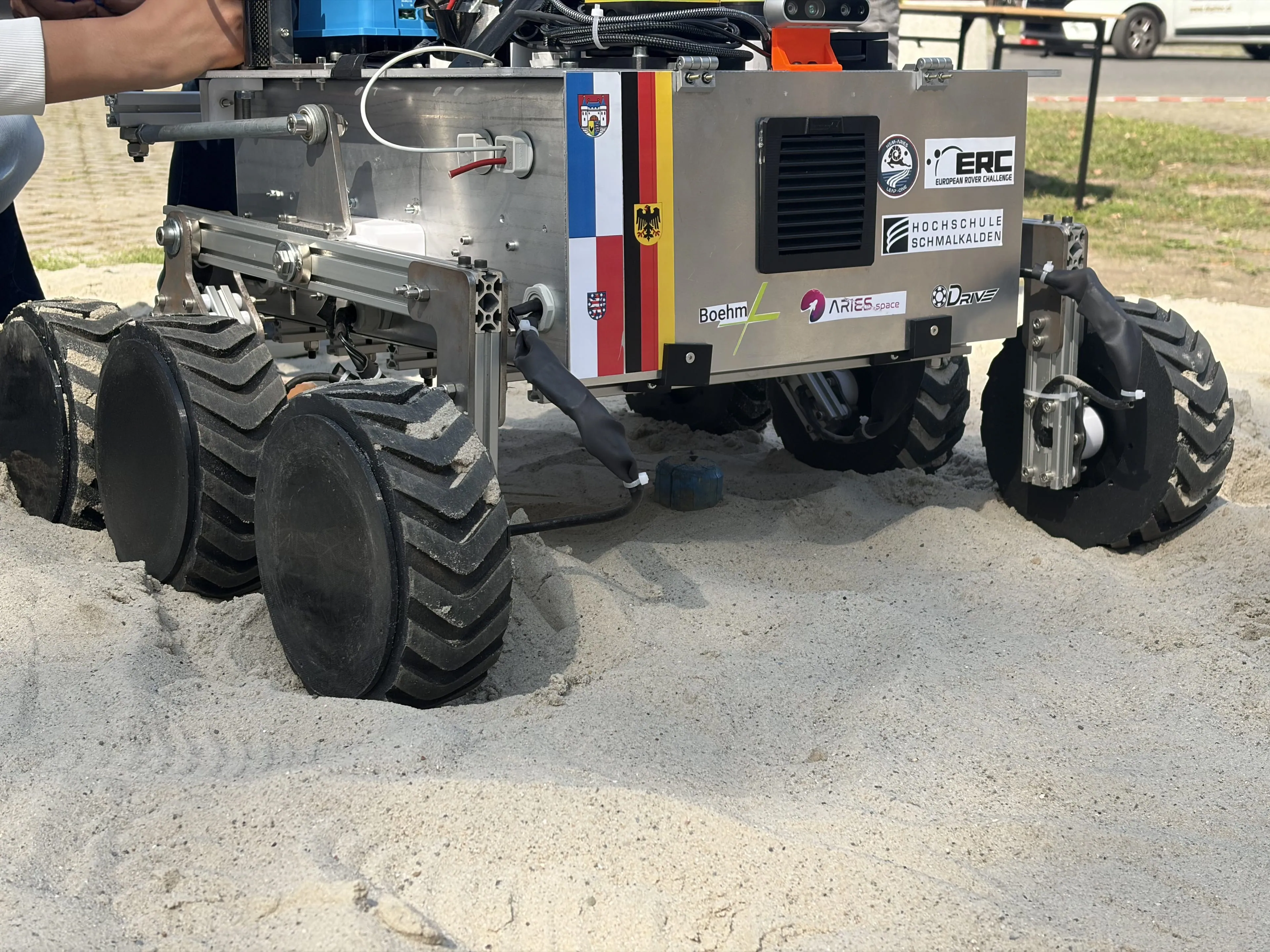
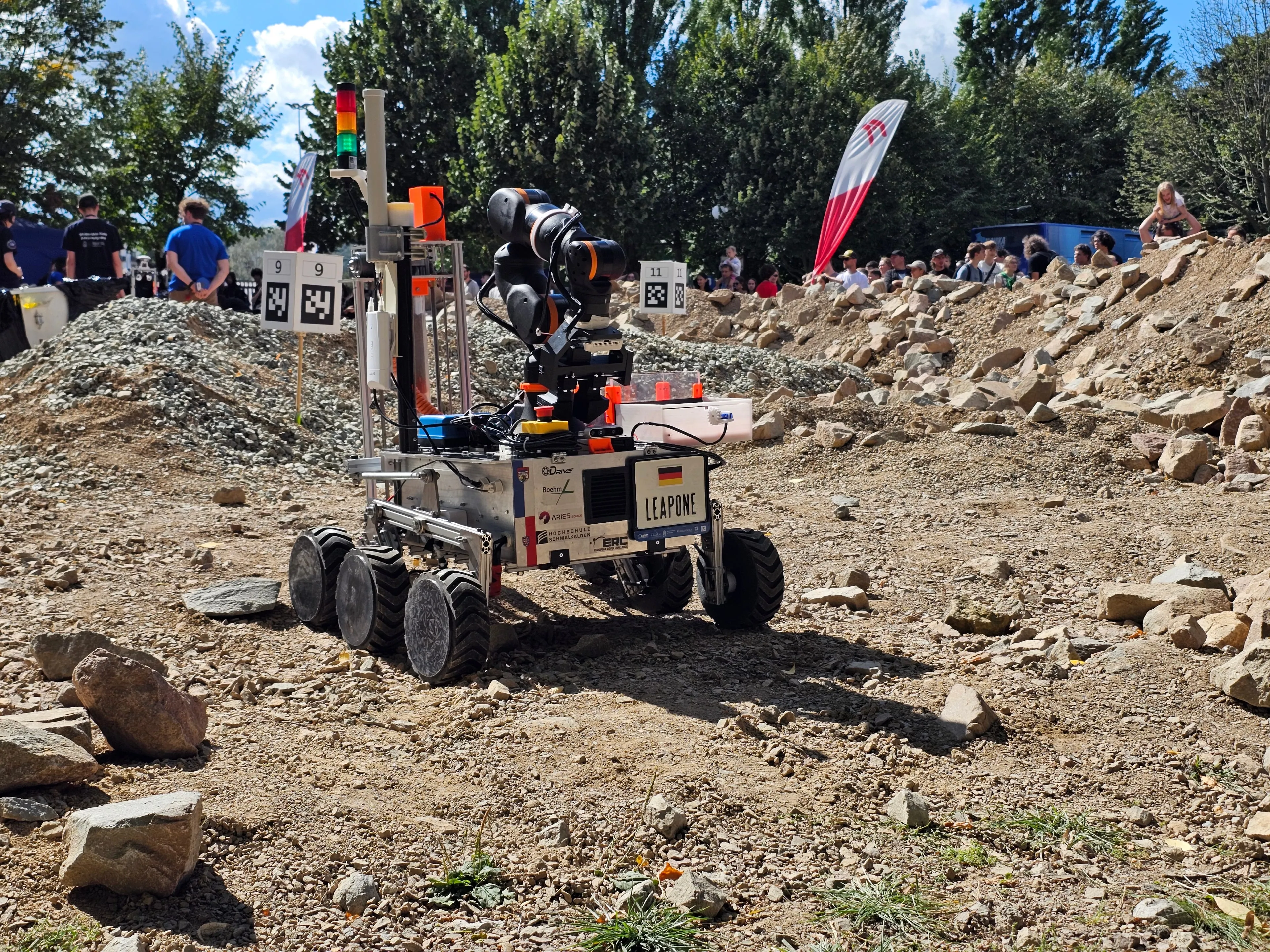
Rocker-bogie suspension built for steep inclines, loose gravel and complex obstacles.
Mobility system on the LEAP-One rover
Custom 3D-printed flexible rover wheel

CUSTOM DRIVETRAIN & 3D TYRES

The passive differential rocker-bogie keeps all six custom TPU wheels in contact over rough terrain. Its 180 mm nominal clearance, 35° slope target and 60 mm obstacle capability are designed for demanding analogue field work.

Power Architecture

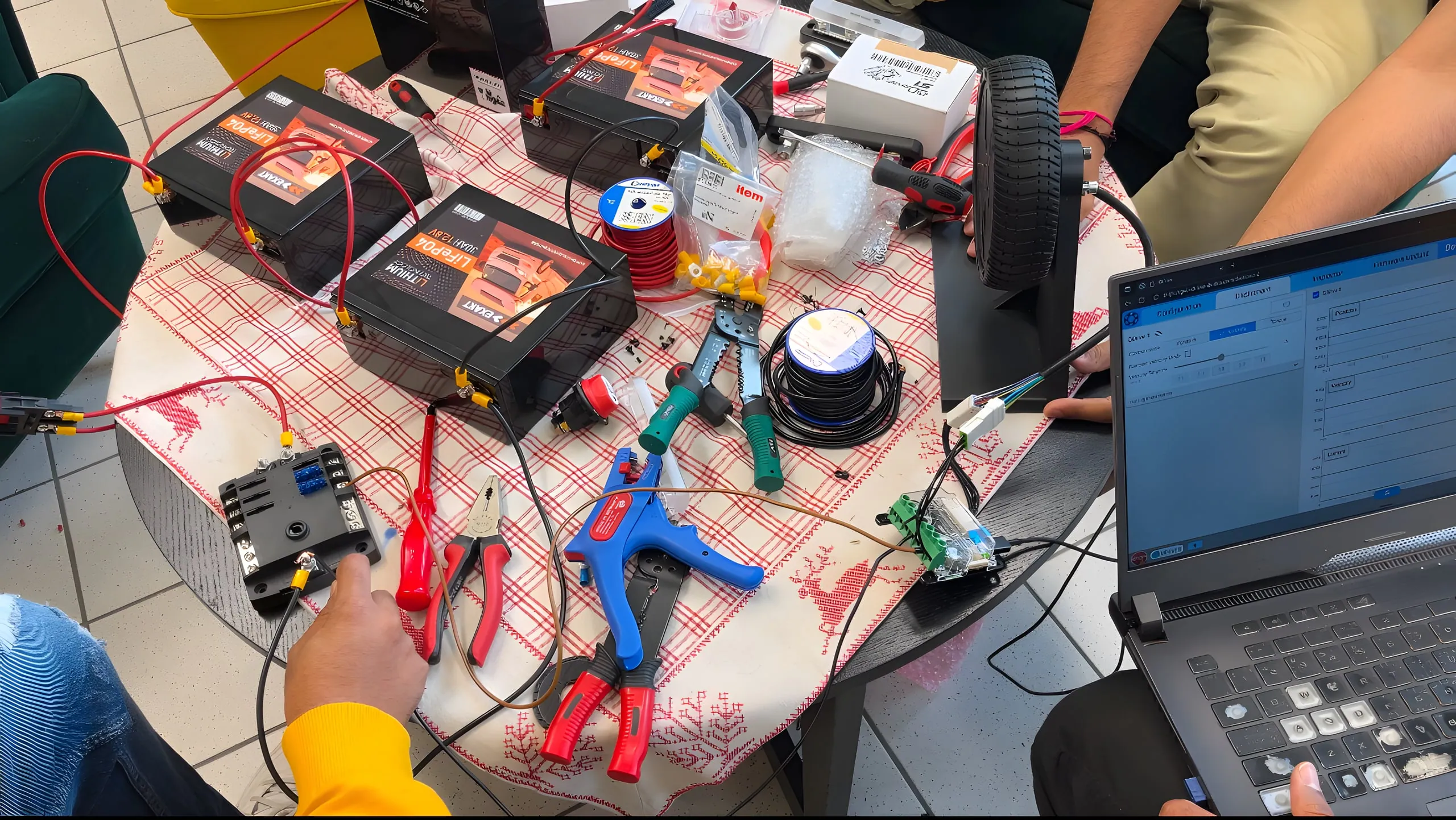
2S2P LiFePO₄ POWER SYSTEM

Four 12.8 V, 30 Ah LiFePO₄ modules are configured in 2S2P to form a 25.6 V, 60 Ah main bus with approximately 1.5 kWh of stored energy.

Regulated DC-DC conversion, centralized distribution and a solid-state-relay E-Stop isolate the mobility bus while retaining computation and communications for diagnostics.

LiFePO4 battery and motor calibration test bench
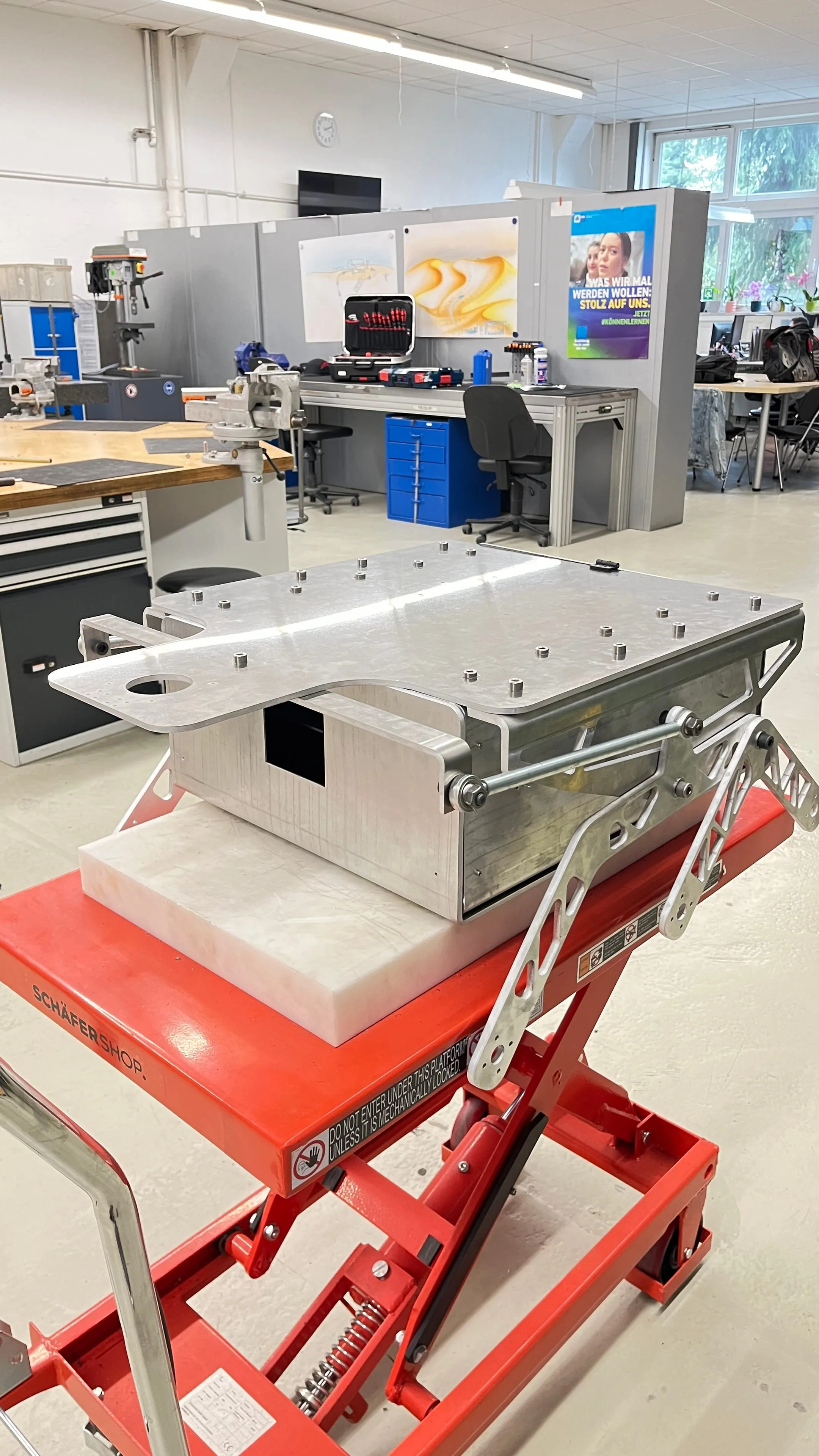
Precision CNC machined aluminum chassis at Boehm facility

Industrial Manufacturing

AEROSPACE-GRADE FABRICATION

The lightweight primary structure uses aluminium 3.3535 (5754), with 20×40 mm rocker linkages and a 20×20 mm differential bar. Boehm Group GmbH manufactured the rover base as part of the team’s industrial collaboration.

Every structural component is engineered to withstand high impact shocks, extreme vibration, and Martian thermal cycles.

Engineering data // project 01

Vehicle dossier.

The verified integration baseline for LEAP-One: a field-ready planetary rover platform built for mobility, science and autonomous operation.

Validated entries16Systems baseline
01 // subsystem

Mobility & structure

Load-bearing structure, terrain handling and motive force.

Estimated system mass
≈74.8 kg
Chassis material
Aluminium 3.3535 (5754)
Suspension type
6-Wheel Rocker-Bogie with Differential
Ground clearance
180 mm nominal
Gradeability
35° incline traverse
Drivetrain
6× Botwheel BLDC + ODrive S1
Wheel architecture
Custom 3D-Printed TPU Wheels
02 // subsystem

Power & compute

Energy storage, endurance and the compute core behind the mission.

Battery architecture
4× 12.8 V, 30 Ah LiFePO₄ in 2S2P
Stored energy
25.6 V · 60 Ah · ≈1.5 kWh
Estimated autonomy
≈1 h 21 min at design load
Primary compute
ROG NUC 15 + Teensy 4.1
03 // subsystem

Mission systems

Autonomy, science instrumentation and mission communication links.

Autonomy framework
ROS 2 on Ubuntu 24.04 · EKF + DWA
Manipulation system
Igus ReBeL 6-DoF · 2 kg payload
Sampling drill
530 mm coaxial auger · ≥300 mm depth
Primary data link
5 GHz AirMAX TDMA · 400 m verified
Backup link
2.4 GHz ExpressLRS

Backed by industry leaders and academic pioneers

Ready to explore the mission?