01ERC 2026 finalist · Leap-2 next
- Place / registered teams
- 17/124
- Score
- 1492.25 pts
- Documentation
- 4th of 25
LEAP Rovers
The LEAP series is our field programme for mobility, manipulation, autonomous navigation and scientific operations.

DRIVE · AUTOMATION · ROBOTICS

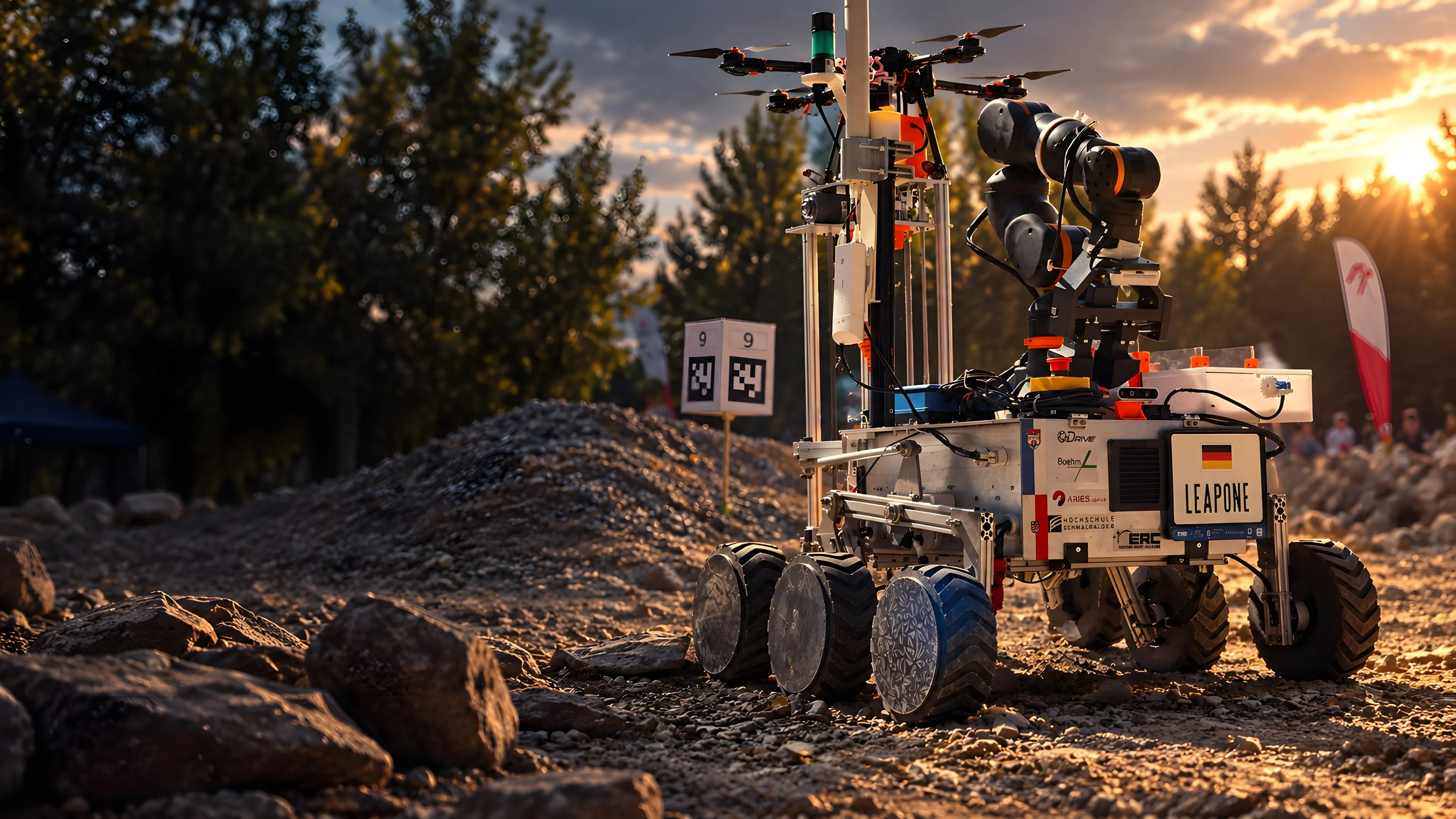
HSM ARIES / HOCHSCHULE SCHMALKALDEN
Students designing, building and field-testing the next generation of planetary rovers.
Project 02 · in development
Follow the build ↗ERC imagery · AI cinematic treatment
Rovers are where mechanics, electronics, autonomy, science payloads and mission operations have to work together under real constraints. LEAP-One is our first proving ground—not the limit of our ambition.
HSM Aries is built to become a practical partner for teams and research projects that need capable systems, disciplined engineering and people ready to test ideas beyond the screen.
How HSM Aries worksThe first systems are on the ground. The same engineering discipline can support the next generation of student-led space technology.
The LEAP series is our field programme for mobility, manipulation, autonomous navigation and scientific operations.
Perception, planning and mission-control tools that move advanced robots safely from a lab bench into the field.
A future programme direction for automation, test infrastructure and precision landing systems that can help teams working in rocketry.
A future programme direction for compact satellite platforms, payload integration and the ground systems that keep them useful.
Leap-2 is the next concrete step. Further missions are published here once they are committed, not before.
Partner with Aries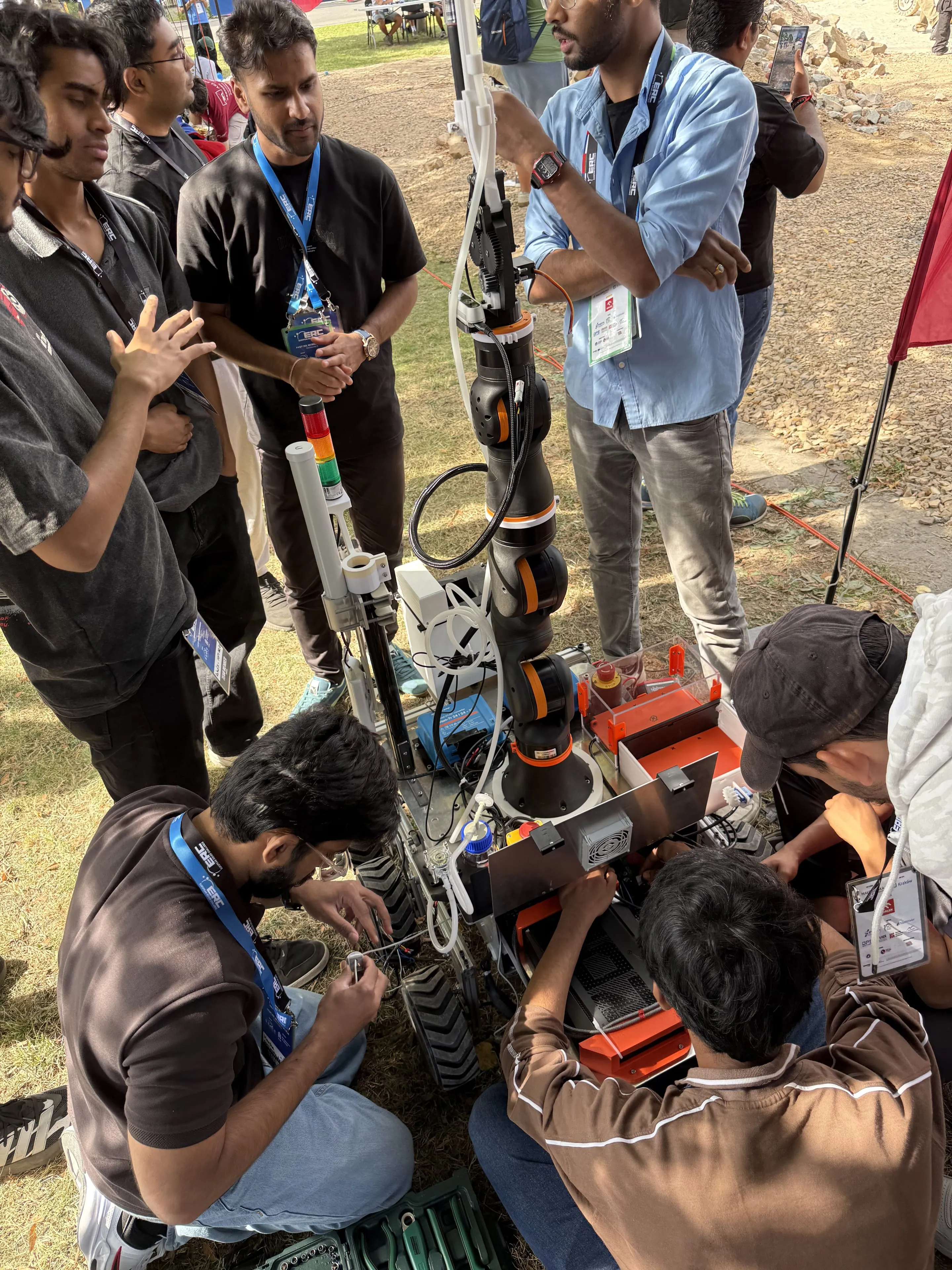 PIT LANE / ERC 2026
Mechanical, electrical and software teams share one vehicle and one weekly design review. Whatever a department builds is proved on the same rover before it goes to the field.
From 124 registered teams worldwide, 25 qualified for the ERC 2026 finals. We finished 17th on our first attempt, without major sponsorship and with the help of partners who believed in us. That is a beginning to be proud of. Now we are taking everything LEAP-One taught us into Leap-2.
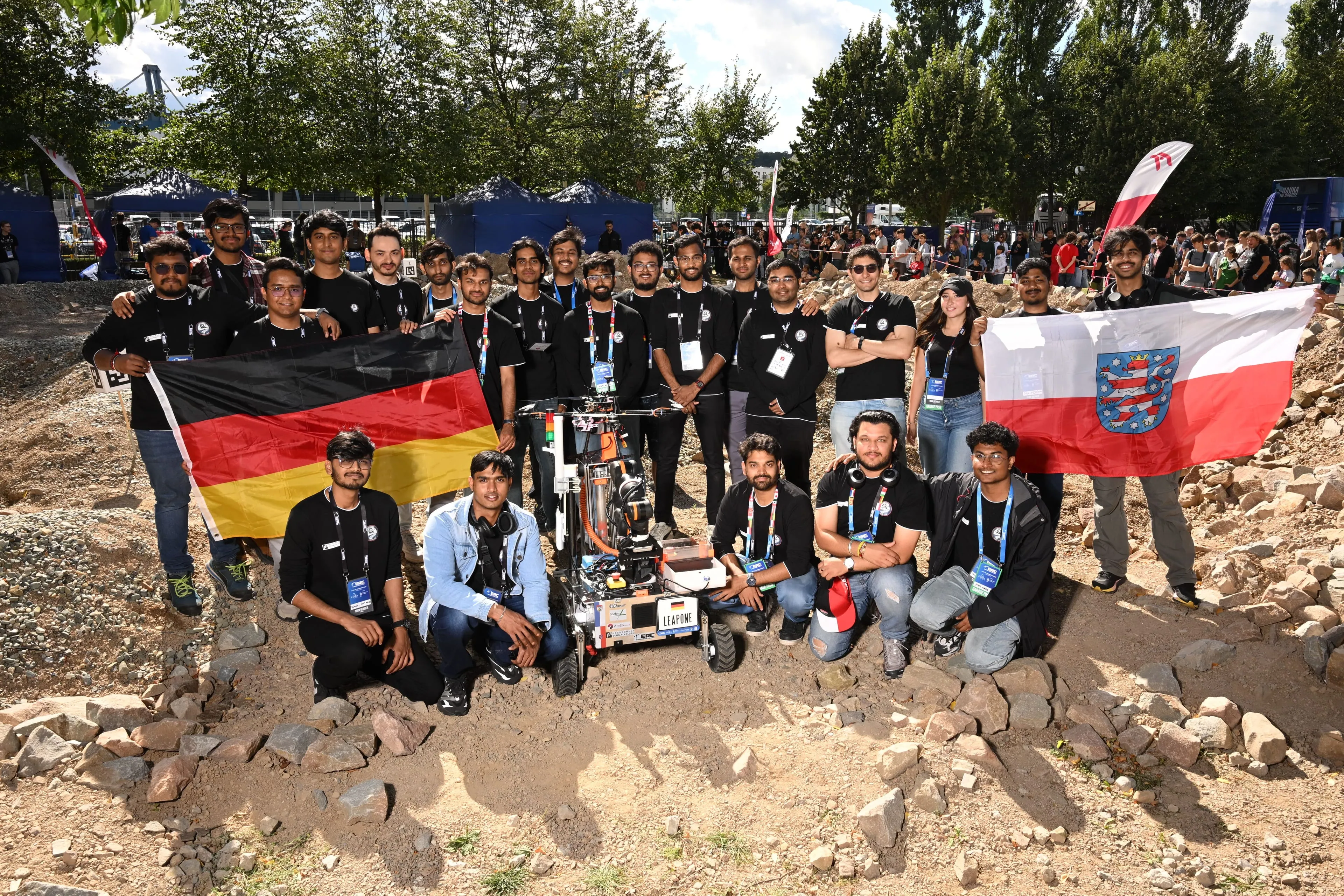 MARS YARD / ERC 2026
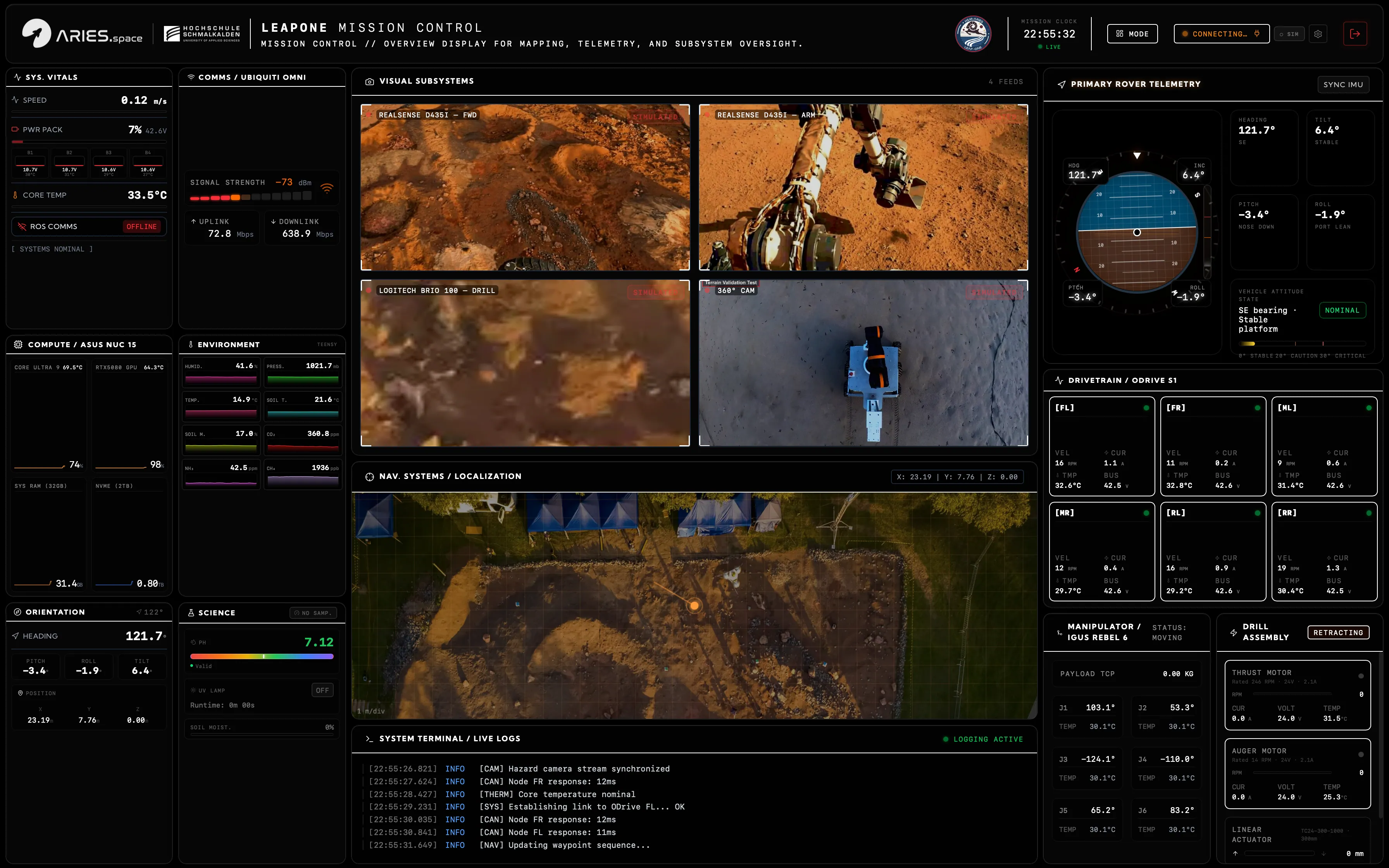
Mission Control is the operator side of LEAP-One: one screen for mapping, telemetry, cameras and the arm, drill and science payloads. It was the operator station at the ERC 2026 finals and carries forward to Leap-2.
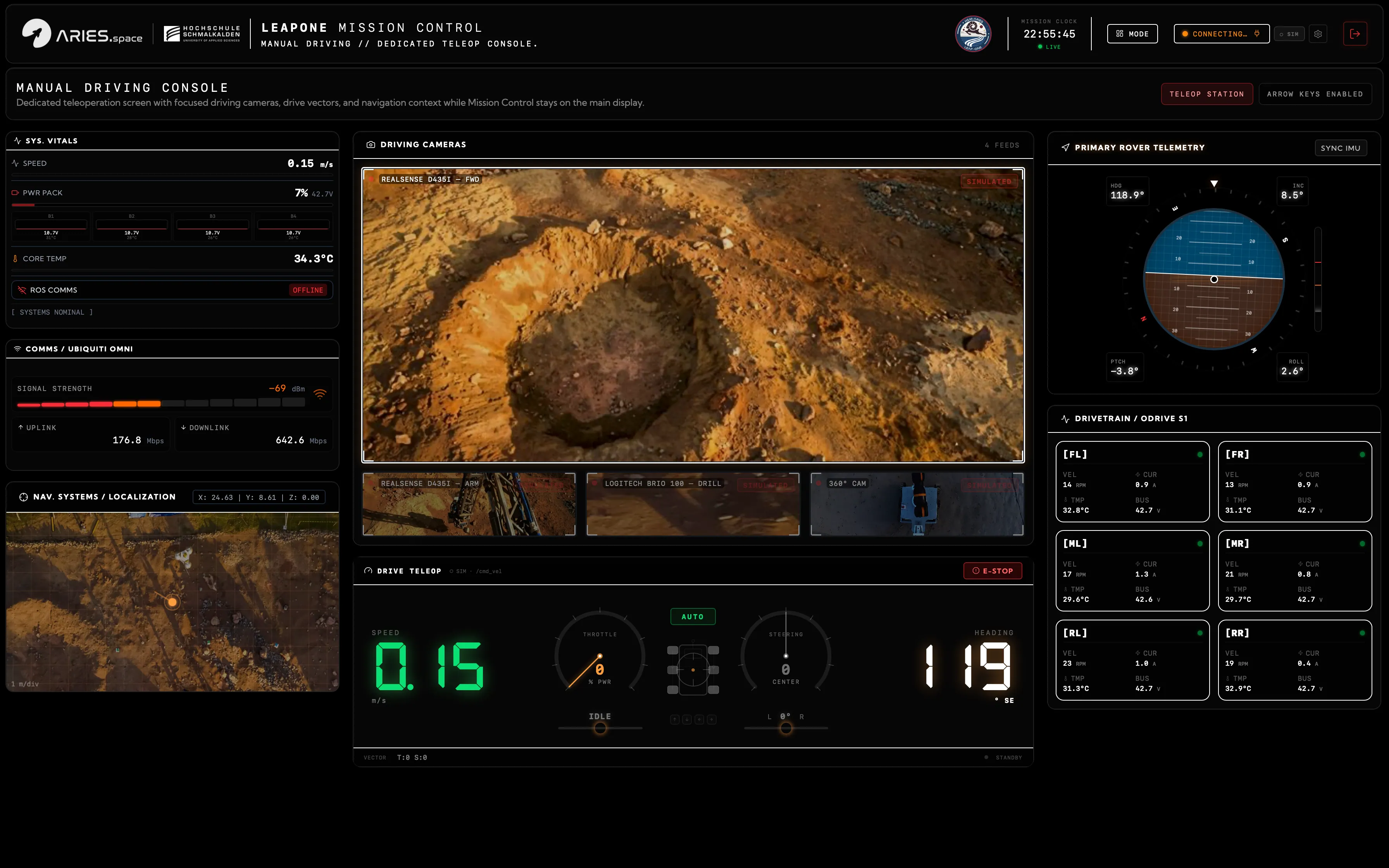
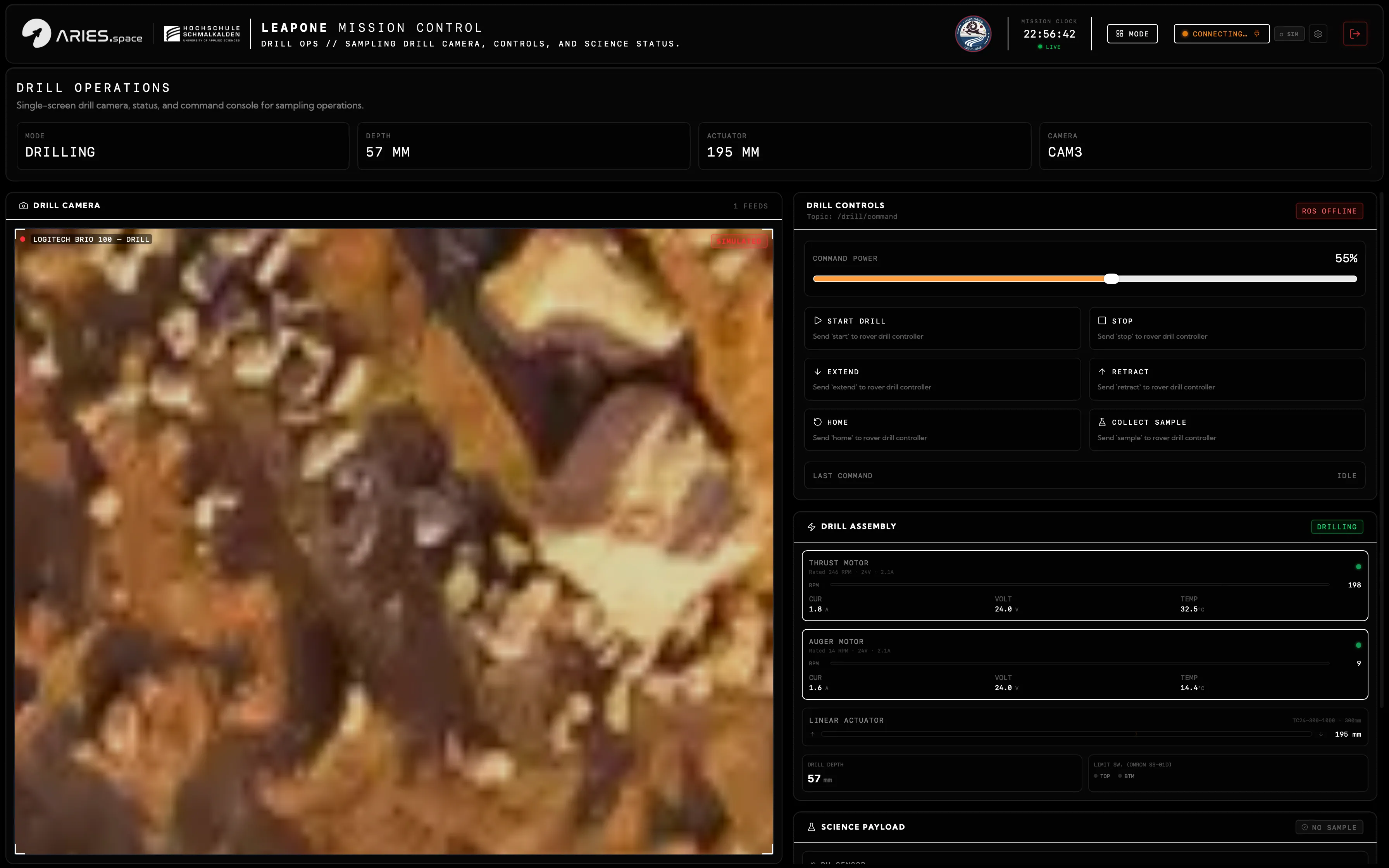
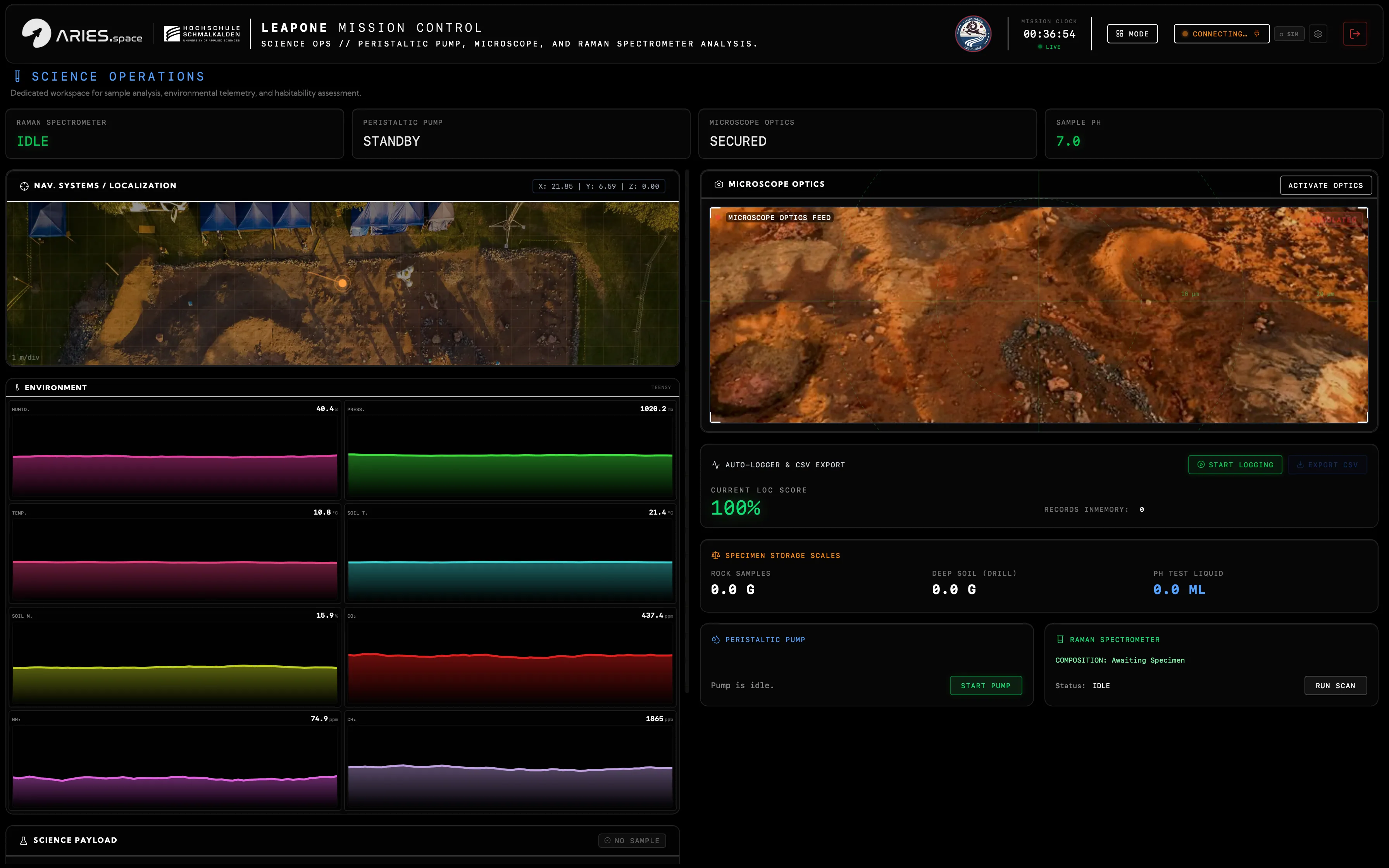
Leap-2 is the second LEAP rover, now in development. Its brief comes from the ERC 2026 result: mass under the allowance, autonomous traverse designed in from the start, and an arm that scores in the maintenance and probing tasks—while keeping the documentation, droning and operations strengths that carried LEAP-One.
| LEAP-One · ERC 2026 | Leap-2 · target |
|---|---|
| −22/200 mass | Under the allowance |
| 43/340 traverse | Autonomous navigation first |
| 12/240 probing | Probing workflow rehearsed before the field |
| 364.25/400 documentation · 4th | Keep |
| 265/300 droning · 6th | Keep |
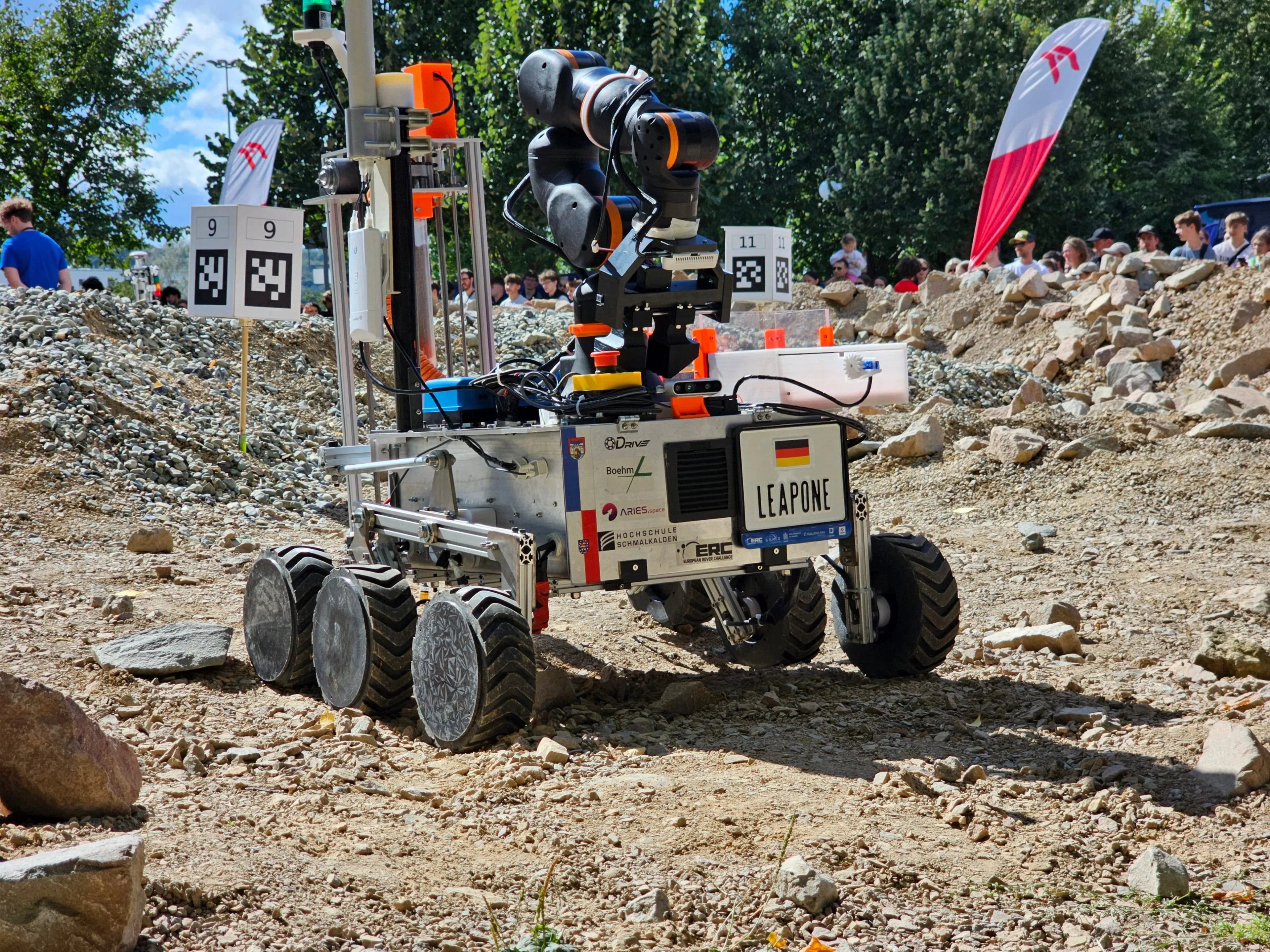 LEAP-One ON THE ROCK FIELD / ERC 2026



Join the crew, partner on a programme or start a mission conversation with HSM Aries.